
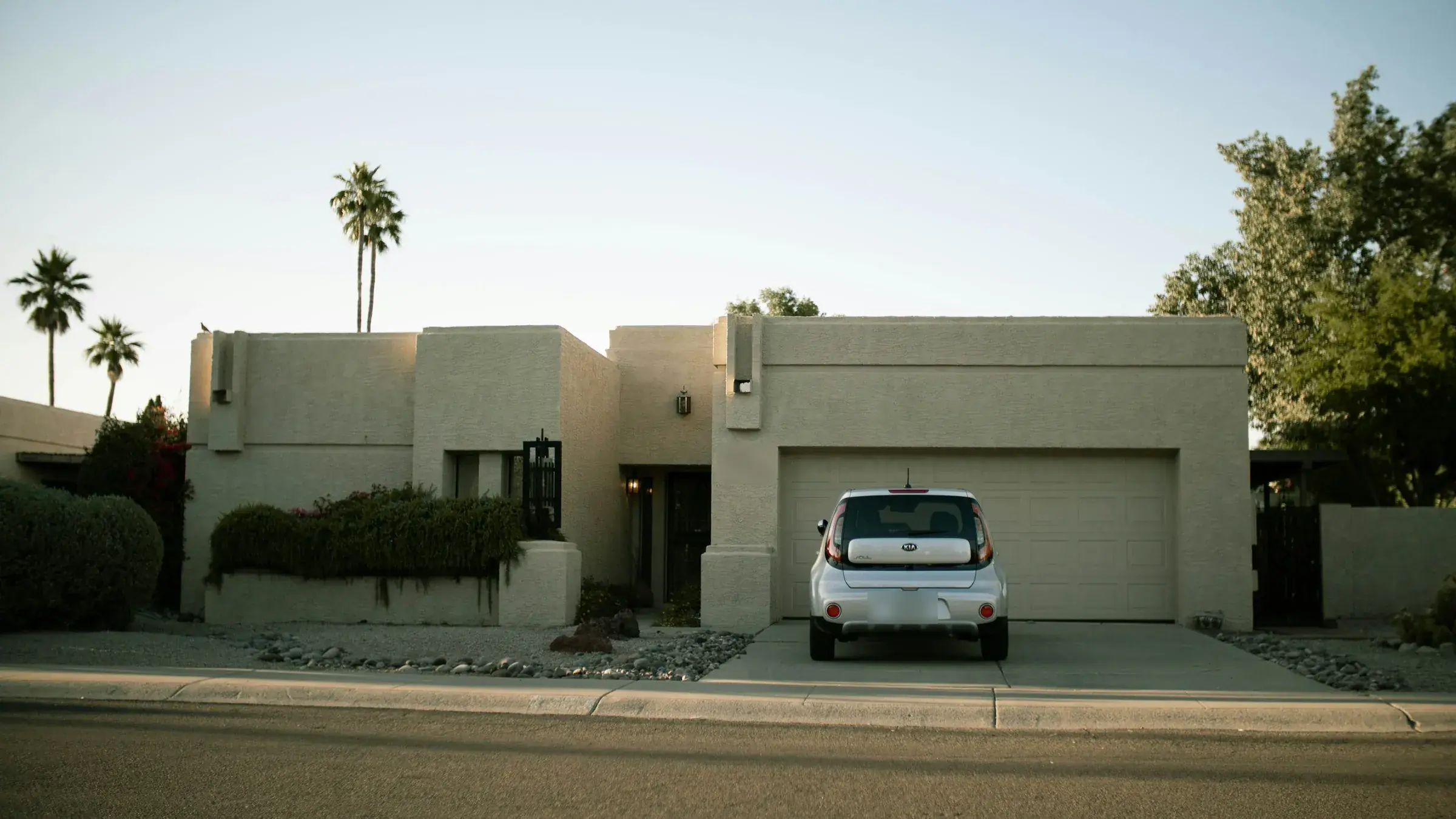
24/7 Emergency Garage Door Repair in Surprise, AZ
A door off its track, a door that will not close, a car shut in behind it. The phone is answered at any hour, and there are no after-hours fees for calling late.
Call at any hour. Emergency work carries no added fee.
No after-hours fees on emergency work
Veteran Owned & OperatedOwner OperatedLicensed, Bonded & InsuredArizona ROC #367070Residential doors since 2017
Do not force it.
A door that is off its track or down on a cable is being held by whatever hardware is left. One more shove takes that away too, and bends sections that were fine.
Unplug the opener.
Pull the plug or trip the breaker. Most of the damage on a call like this is done after the fault, while someone keeps pressing the button to see if it will go this time.
Keep people and cars clear.
Nothing parked under the opening, nobody underneath, kids and the dog inside. A door on a broken cable or a snapped spring can come down the rest of the way without warning.
Text a photo of the door.
Stand back far enough to get the whole opening in the frame, track included, and send it. It says what the job is and what to bring, before anyone sets off.
A door off its track.
A sectional door runs on rollers sitting in a steel track each side. When a roller leaves the track, the section it carried is free to twist, and weight that was spread across the whole door lands on whatever is still attached. That is why an off-track door looks bent before anything on it has broken.
Four things put it there, and which one it was decides what the repair is. Something hit the door, usually a car reversing. A cable snapped or came off its drum and dropped one corner. A roller seized or bent its stem. Or the track is loose, out of line, or crushed where something caught it.
Cables.
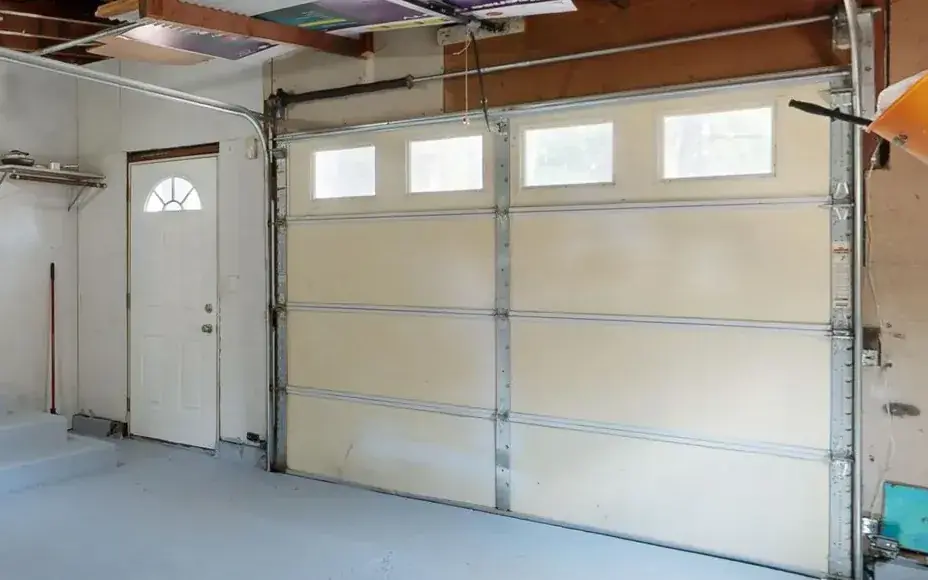
Two steel cables lift the door, one each side. They fail quietly, and all three of these show from the garage floor.
Fraying at the drum.
The strands go first where the cable wraps. A frayed cable is on its way to snapping, and you can see it by following the cable from the bottom bracket up the jamb.
One corner dropped.
A snapped cable lets its side of the door fall while the other stays up. The door wedges at an angle, and that is usually what puts the rollers out of the track.
Slack looping off the shaft.
A cable off its drum goes loose and loops round the shaft. Nothing has broken yet, and running the opener is what turns that into something that has.
Garage door hardware repair in Surprise, AZ.
Rollers, drums, track, hinges and bearings are what the door runs on. None of them are expensive and all of them carry load, which is why a door that has gone noisy, slow or crooked is usually telling you that one of them has worn out rather than that the door is finished.
They also fail together. A seized roller drags until the track bends, a bent track chews the next roller, and a dry bearing lets the shaft wobble until the drums wind unevenly and a cable comes off. The part that failed gets replaced along with the parts it took with it, which is the difference between a repair that holds and one you call back about.
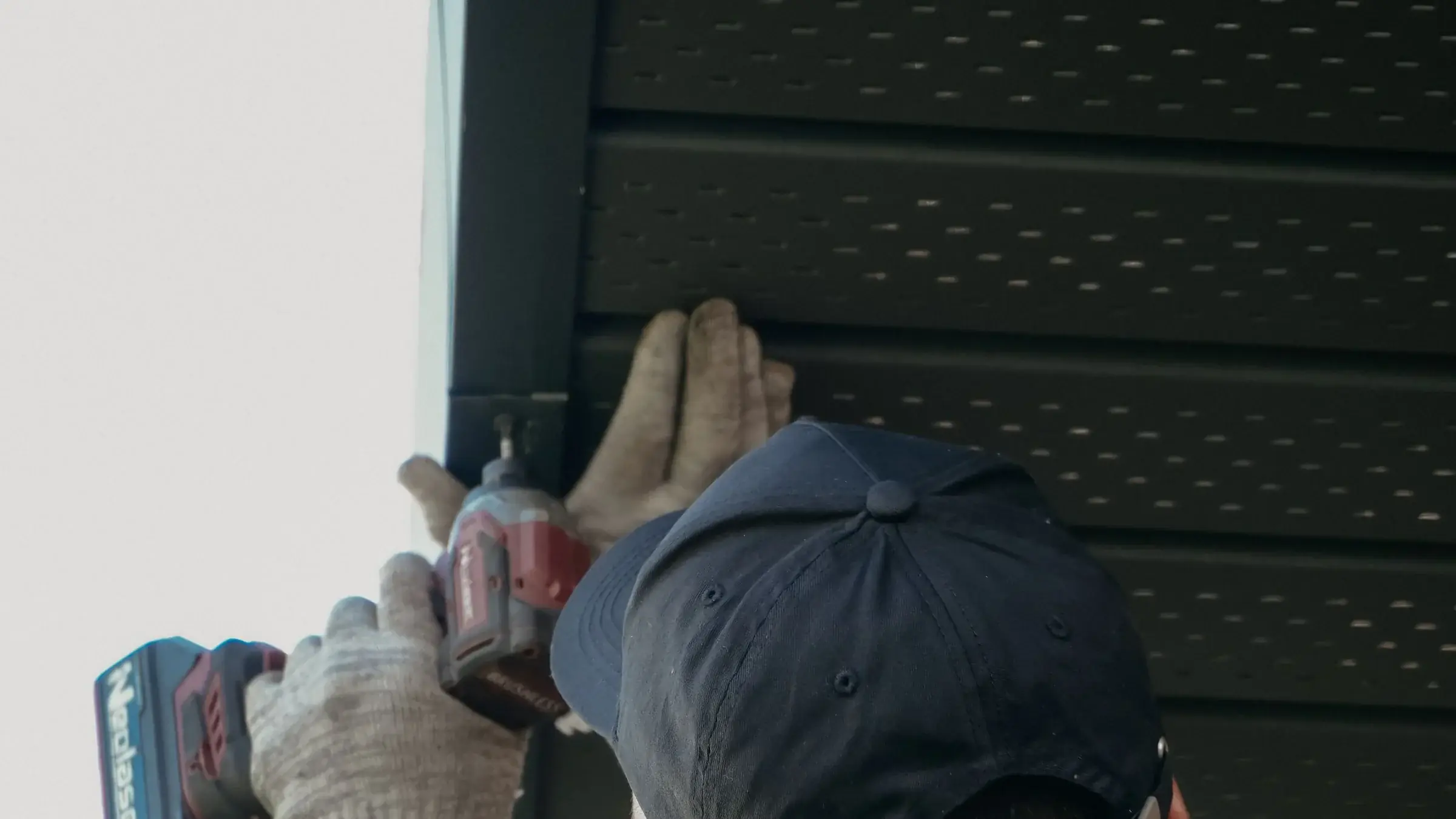
The five parts, and what each one does.
Which one is yours is usually decided by the noise it makes.
Rollers
A wheel on a stem, one into each hinge.
They carry the door in the track. Nylon runs quieter, steel lasts longer in this heat, and a seized one skids instead of rolling. That is the squeal.
Drums
Cast wheels at each end of the torsion shaft.
The cables wind onto them as the door lifts. A worn groove, or a drum that has slipped on the shaft, lets one side lift further than the other.
Tracks
Vertical up the jamb, horizontal back along the ceiling.
Bent, loose or out of line and the rollers bind. One that has been hit is straightened where the steel has not creased and replaced where it has.
Hinges
Numbered plates joining one section to the next.
They hold the rollers and let the door fold into the curve. Cracked ones are common on older doors and let the sections rack against each other.
Bearings
End plates each side, and a centre bearing on the header.
They hold the torsion shaft straight. Dry ones rumble as the door moves, and one left alone wears its own plate until the shaft sits off centre.
Seals and weather stripping.
The rubber the door closes onto. The cheapest part of the door, and the one most likely to be missing.
The bottom seal.
A rubber gasket in the retainer along the bottom section. Heat and UV split it, and once it has gone, water, dust and scorpions come under the door.
The jamb and header stops.
The vinyl-backed strip nailed to the frame the door shuts against. It goes brittle in this sun and tears off in lengths, starting at the top corners.
Daylight is the test.
Stand inside with the door shut. Light down a jamb or along the floor is the seal telling you it is finished. A new one is measured to the retainer: the wrong profile will not stay in.
What after hours means here.
Calling at any hour reaches Check Six rather than an answering service, and the hour changes nothing about the price: no night rate, no weekend rate, no call-out premium.
What you will not get is a promised time. Where the work already stands decides what is possible, and a company that hands you a window at midnight is handing you a number it made up. You are told on the call what can be done, and emergency work gets best efforts.
Knowing what is not an emergency saves you a call. A door that is shut and can stay shut is not one. A door that will not close, a car shut in that you need in the morning, or a door standing open on an empty house, are.
What an emergency call costs.
You get the out-the-door price before anything comes apart. One number for the finished job, and it does not move while the work happens. If the answer is no, the tools go back in the truck.
The hour is not one of the things that moves it. No after-hours fee, no night rate, no weekend rate: that is the whole of what emergency pricing means here, and it is the part a company with a dispatcher cannot match.
What the number depends on
- Which part failed, and what it took with it
- Whether the door is off the track or down on a cable
- Whether a section is bent past straightening
- Whether the opener was run on it after the fault
Estimates on new installations and replacements are free. An emergency repair is a repair rather than a replacement, so it is quoted on site, before the work starts.

The owner behind the number.
Check Six is owned and operated by Zachary Pfisthner, an Arizona-born Air Force veteran who has been in the garage door trade since 2017. The work goes out under his licence, and the number you were quoted is the number he stands behind.
- Born in Arizona
- Former active-duty U.S. Air Force
- Former law enforcement officer
- In the garage door trade since 2017
- Husband and father
Emergency questions, answered.
Four that get asked at the wrong hour. If yours is not here, text a photo of the door and ask.
Text a questionDoes calling at night or on a weekend cost more?
No. There is no night rate, no weekend rate and no call-out premium: you get the same out-the-door price you would get at ten in the morning, agreed before anything comes apart. Call at any hour. Emergency work carries no added fee.
My car is shut in the garage. Can I get it out myself?
Sometimes, and check one thing first. The red cord on the opener rail disconnects the door from the motor so it can be lifted by hand, which is safe while the springs are sound. If a spring is broken, the door has nothing holding its weight and that cord can drop it. So look at the shaft above the door: an unbroken spring is one continuous coil, a broken one has a gap of an inch or two. If you see a gap, leave the cord alone and call.
The door will not close and I have to leave the house. What can I do?
Say so on the call, because it changes the job. If the door still moves freely by hand, the usual answer is to disconnect the opener, lower it by hand, and clamp locking pliers to the track above a roller each side so it cannot be lifted. If it does not, forcing it down is how a bent section becomes a new door. Say which one you have on the call.
Can a door that came off its track be put back on?
Usually. The track comes off its mounts, the rollers go back in, and the track is straightened or replaced before it is bolted up again. What decides it is the sections rather than the track: creased steel, or a hinge torn through the skin, is damage no track work fixes, and the choice is then between new sections and a new door.
Ready when you are.
Call first: the phone is answered, at any hour. Text second, with a photo of the door and a line about what it is doing.